
Building Bridges in Cancer Care: Leadership, Advocacy, and Equity
- Jackie Branch
- Apr 7
- 4 min read

Updated: Apr 13
There are moments in your journey that quietly shift something within you, moments that deepen your sense of purpose and remind you why you chose this path in the first place.

Being selected for the Latino Cancer Patient Advocate Training Program was one of those moments for me.
As someone who is deeply committed to public health and community-centered work, stepping into a space alongside cancer survivors and advocates from diverse backgrounds felt both grounding and expansive. We came together with a shared intention: to strengthen our voices, deepen our understanding, and step more fully into leadership on behalf of patients and research participants.
This experience was a powerful reminder that lived experience is not just valuable, it is essential. It shapes how we understand care, how we design interventions, and how we advocate for more equitable and human-centered systems.
I'm forever grateful to Dr. Barbara Segarra-Vázquez of the University of Puerto Rico and Sandi Stanford of the Alamo Breast Cancer Foundation, and member of the Community Advisory Board of the Mays Cancer Center, who led this training with such intention and care. Their leadership, along with the support of sponsors including Exact Sciences, Bristol Myers Squibb, Pfizer, Menarini Stemline, and the GRASP program, made this experience possible.


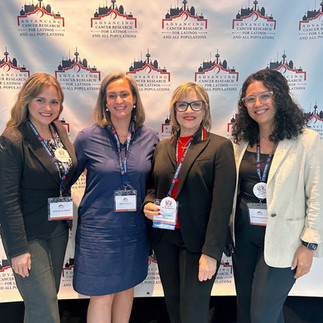
I’m also incredibly thankful for our cohort mentors, Andrea Suarez Vargas and Marielle Santos McLeod, whose guidance support our growth throughout the program. And to our cohort of 16, what began as a shared learning experience quickly evolved into something much deeper. We built trust, connection, and relationships that feel like family. As we look ahead to graduating this upcoming summer, I feel a deep sense of gratitude for how far we’ve come together.


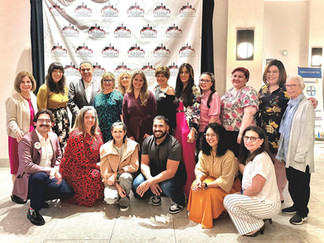


Following the training, I attended the 5th Biennial Advancing Cancer Research for Latinos and All Populations Conference, hosted biennially by the Mays Cancer Center and the Institute for Health Promotion Research at UT Health San Antonio. Being in a space with over 300 researchers, clinicians, advocates, and students all committed to addressing cancer disparities was both inspiring and affirming.


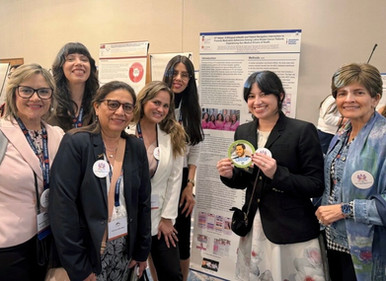


As a Puerto Rican, this experience held an even deeper meaning for me. There was a profound sense of pride in witnessing the presence and leadership of so many fellow Puerto Ricans as key speakers and contributors throughout the conference. Seeing our voices, our stories, and our expertise represented at such a high level was both powerful and emotional. It was a reminder of the strength, resilience, and impact of our community in advancing health equity and shaping the future of cancer research and care.


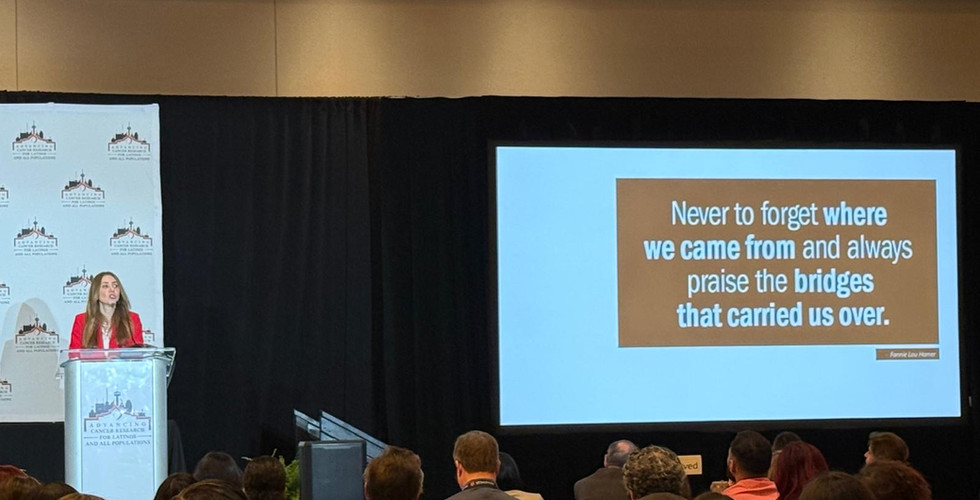


The conversations throughout the conference highlighted the urgency of this work. While progress has been made in prevention, screening, and treatment, cancer remains a leading cause of death in the United States. At the same time, incidence rates are rising for several cancers associated with obesity, including breast, uterine, colon, pancreatic, kidney, and liver cancers. Even more concerning, colorectal cancer is now the leading cause of cancer death among individuals under 50.





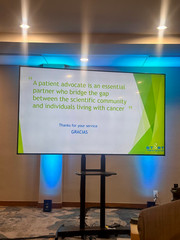


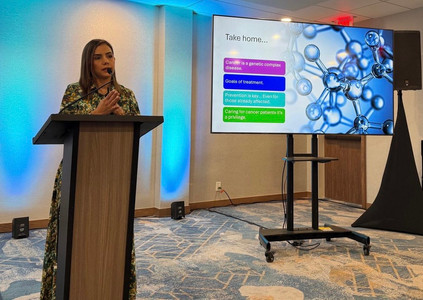
These realities reinforce the importance of the work ahead.
Why Research Advocacy Matters
For me, research advocacy is about making sure our communities are seen, heard, and included. Too often, Latino and other underserved communities have been underrepresented in research, which impacts the care we receive. Being in these spaces reminded me how important it is to bring our lived experiences into the conversation, to help shape research that truly reflects our realities and leads to more equitable outcomes for all.

What stood out most to me was the collective commitment to advancing equitable care through research, community-based interventions, advocacy, and policy. There is a clear recognition that improving outcomes requires more than innovation in science. It requires listening to communities, elevating lived experiences, and building systems that are responsive, inclusive, and just.

As Dr. Amelie G. Ramirez, a nationally recognized public health researcher and founder of the conference, as well as director of the Institute for Health Promotion Research at UT Health San Antonio and Salud America!, shared, while there is still work to be done, there is power in coming together with intention and purpose to reduce the cancer burden across all populations.
I am leaving this experience with a deeper sense of responsibility and a renewed commitment to advancing health equity, particularly within Latino communities. I feel honored to be part of a growing network of leaders, advocates, and changemakers working toward more equitable and compassionate cancer care.
Advancing cancer care and research for Latinos and all populations requires cross-sector collaboration and active engagement. This work calls on all of us. Whether you are in public health, research, clinical care, nonprofit, or
industry, there is a role to play in shaping a more equitable
future.

As a mother, an advocate, breast cancer survivor and a proud Puerto Rican, this work is deeply personal to me. It’s about the kind of future we are creating for our children, our families, and the generations that follow. It’s about ensuring that no one feels unseen or unheard in their health journey.
Spaces like this remind me that when we come together with intention, compassion, and a shared commitment to equity, real change is not only possible, but also already in motion.

Comments